Discover 10 neighborhood birds you can learn to recognize, and start watching birds from home or on your walk. A friendly, relaxed, and thorough guide to identifying, enjoying, and caring for the city birds living right beside you.
The day I found out my neighborhood was full of life
There was a time when I walked through my neighborhood without noticing a thing. I went from one place to another like the world was a straight line between my front door and wherever I was headed. Maybe that happens to you too. It happens to almost all of us. We live on autopilot.
Then one day, waiting for the water to boil for tea, I heard a song I didn’t recognize. I leaned out the window and saw a mockingbird on a branch, singing like there was no tomorrow. That was the moment I actually stopped.
I stayed there listening, and I realized something that changed the way I move through the world. I didn’t need to go anywhere far to feel that nature was mine too. It was right there, on my street, in my square, in the trees I saw every day without seeing them.
I remember that moment fondly, because it was the start of something wonderful. Watching the birds in my own neighborhood was like finding a hidden layer in a book I’d read a thousand times and never understood. My neighborhood hasn’t been the same since, though of course it’s exactly the same. I’m the one who changed.
Watching neighborhood birds is a way of looking at life again
Watching neighborhood birds might sound like a quiet hobby, but for me it’s something much deeper. It’s a way of slowing down, of looking on purpose, of getting back the curiosity we had as kids.
Once you start recognizing the birds around you, your surroundings stop being scenery and turn into a living place. You notice that some birds get up earlier than you do, that some have serious arguments over a branch, and that others fly the same route over the rooftops every single day.
I like to think of city birds as our quiet neighbors. They ask nothing of us, and they keep us company anyway. They teach us plenty without saying a word.
Fair warning: once you start seeing them, you won’t stop looking.
10 neighborhood birds you can learn to recognize
1. House sparrow, the little rebel of the sidewalk
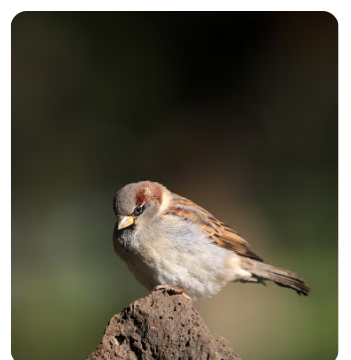
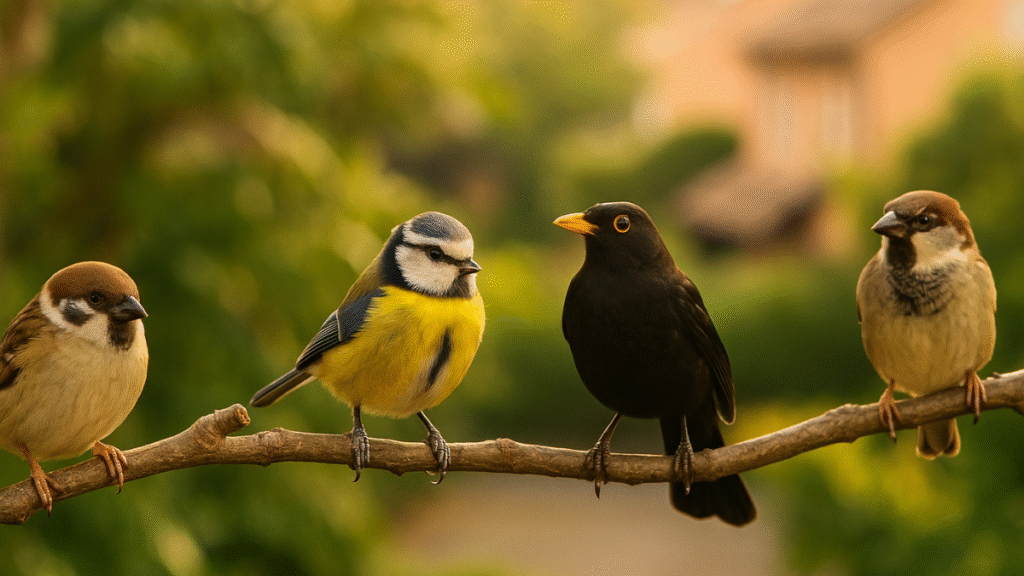
The house sparrow, the one that seems to be everywhere at once, is the soul of any neighborhood as far as I’m concerned. Small, curious, bold, and sociable. Noise, people, cars, crowded patios, none of it bothers him. He always finds his spot.
How to spot it
Sparrows have round little bodies and brown feathers that look plain until you really look, and then you find a thousand shades of earth in there. Males wear a black bib on the chest and have stronger markings on the head. Females are softer and more even in tone.
Where to find it
Easy. Wherever there are people. Streetlights, benches, patio floors, hedges, parks, windowsills, courtyards.
Crumbs on the ground help.
Something you might not know
House sparrows have declined in cities on both sides of the Atlantic. It sounds unlikely, but it’s true. Fewer insects, more pollution, less green space. So if you come across a big noisy flock of them one day, treat it like the small urban treasure it is.
How to help them
Clean water, plants that bring in insects, and no pesticides. They’ll thank you with little hops across the ground.
2. Pigeon, the neighbor who’s always there and never gets looked at
I know pigeons don’t have the best reputation, but I promise that if you watch them for a while, you’ll find they’re far more interesting than we give them credit for.
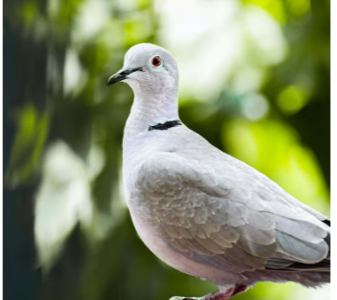
Their necks catch green and purple when the sun hits them, and the way they walk is almost a dance.
How to spot it
Sturdy body, gray wings, iridescent neck, and a huge range of shades from one bird to the next. Some are nearly white, others almost black.
Where to find it
Plazas, rooftops, traffic circles, monuments. They’re true specialists at living alongside us.
A curious detail
They descend from homing pigeons and still carry that extraordinary sense of direction. A pigeon can find its way home from miles and miles away.
How to live alongside them
Skip the bread, it’s bad for them. If you want to help, put out water on hot days and keep the area clean.
3. Northern mockingbird, the musician who sings as the light goes
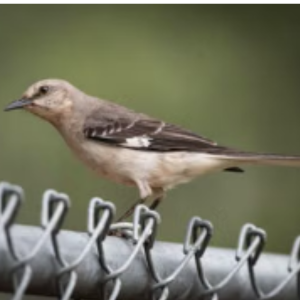
The mockingbird sings so beautifully that when you stop and really listen, it’s like somebody set the golden hour to music.
He runs through phrase after phrase, repeating each one a few times before moving on, and he’ll keep going long after the light is gone.
How to spot it
Slim gray body, paler underneath, with white flashes on the wings that show the second he takes off. Long tail, dark eyes, and a habit of perching somewhere high where everyone can hear him.
Where to find it
He likes lawns, hedges, and anywhere with a tall perch to sing from. If you have a yard, he’s probably visiting without you noticing.
Something special
Every mockingbird has his own version of the song. He borrows from other birds, from car alarms, from squeaky gates, and stitches it into something nobody else sings. Listening to them is a gift.
How to help it
Skip the chemicals in the yard, put out clean water, and leave a few corners with leaf litter. That’s enough to keep him happy.
4. Blue jay, the smartest neighbor on the block
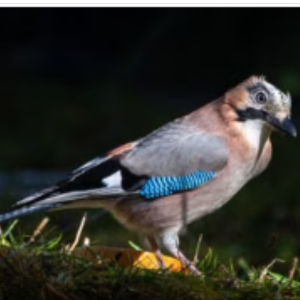
Blue jays are gorgeous, bold, big, and impossible to ignore. They’re smart. Far smarter than we assume. Yes, they’re curious about shiny things, but that isn’t thieving. It’s that they’re extraordinarily observant animals.
How to spot it
Blue above, white below, black barring across the wings and tail, and a crest that goes up whenever he’s worked up about something. He has a presence that fills a whole yard.
Where to find it
Oaks, big parks, tree-lined streets. They move into neighborhoods without hesitating.
A surprising fact
They imitate hawks. A blue jay can copy a red-tailed hawk so convincingly that every other bird at the feeder scatters, leaving him the seed. They also plant oak trees by accident, burying acorns and forgetting a few.
How to look after it
Give them room. Jays are allies that help keep the neighborhood in balance.
5. Barn swallow, the friend who announces spring
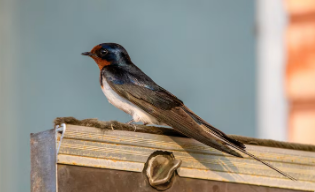
The barn swallow is a seasonal visitor. When you see one, you know something is shifting in the air. Its arrival brings the feeling that a new stretch is starting.
How to spot it
Rusty throat, long wings, and a deeply forked tail. The flight is fast and beautiful, like small dark brushstrokes across the sky.
Where to find it
Quiet neighborhoods, small towns, and anywhere it can build its mud nest under a porch, a bridge, or an eave.
Its loveliest secret
It comes back to nearly the same spot to nest, year after year. It always remembers the place.
How to help it
Leave the nests where they are. Swallows eat insects, so they keep the mosquitoes down for you.
6. Northern cardinal, the little red heart of winter
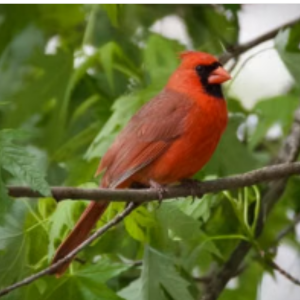
The cardinal has something that gets you. That red against a gray winter, those dark eyes, that curious look like he’s actually watching you back.
How to spot it
The male is brilliant red all over, with a black mask and a pointed crest. The female is warm brown with red in the wings and tail, and she’s every bit as striking.
Where to find it
Hedges, yards, and feeders, especially in winter. If you keep planters on a balcony, he might come by.
A funny truth
He’s territorial. Extremely. As sweet as he looks, he’ll spend an entire morning attacking his own reflection in a window or a car mirror, convinced there’s a rival on his patch.
How to help it
Shelter, water, and sunflower seeds on cold days are enough to bring him back.
7. Chickadee, the tiny spark of the block
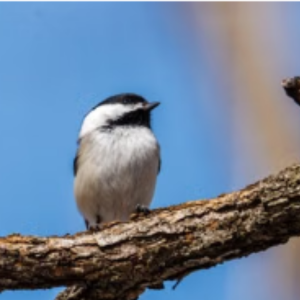
This little bird is a delight. Tiny and absolutely full of energy.
How to spot it
Black cap, crisp white cheeks, gray back, soft pale chest. Small, round, and never still for a second.
Where to find it
Hedges, trees, yards, and just about any feeder in town.
An unexpected talent
They’re remarkably intelligent. In the fall a chickadee hides thousands of seeds around its territory, and it remembers where every one of them is. The part of its brain that handles memory grows to make room.
How to look after it
Sunflower seeds, nest boxes, and no pesticides.
8. Collared dove, the one watching everything from above
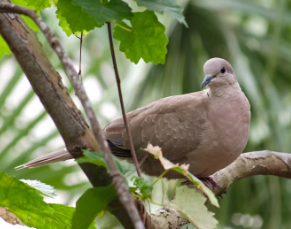
Calm, elegant, and easy to pick out thanks to the black collar.
How to spot it
Soft pale gray feathers, dark eyes, and a thin black band around the back of the neck.
Where to find it
Antennas, wires, rooftops, plazas, and parks.
A fun fact
It showed up in Florida in the 1980s and has since spread across nearly the whole continent. Forty years to cross a country.
How to help it
Fresh water in summer, and corners with trees.
9. Phoebe, the restless one down by the water
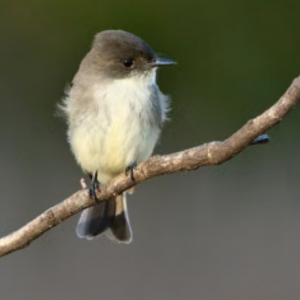
The phoebe always looks like she’s in a hurry. She perches, pumps her tail up and down without stopping, darts out after an insect, and lands right back where she started.
How to spot it
Small body, gray above and pale below, dark head, and that constant tail-pumping that gives her away before you’ve even focused on her.
Where to find it
Bridges, porches, parking lots, and anywhere near water. She nests on ledges and beams.
One more thing
She’ll let you get surprisingly close, like the noise around her is somebody else’s problem.
How to look after it
Keep water clean and natural, cut back on plastics, and leave her nest alone if she builds one over your door.
10. Chimney swift, the true owner of the sky
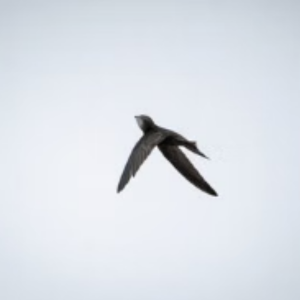
If one bird stands for freedom, it’s the swift. It flies without stopping for months on end. It’s a marvel.
How to spot it
Dark body, long curved wings, and a flight so fast and unbroken that people describe it as a cigar with wings.
Where to find it
In summer, high over the rooftops, crossing the sky like dark arrows. You’ll usually hear the chattering before you find the bird.
Its biggest secret
It spends almost its entire life in the air. On fall evenings, thousands of them spiral down into a single chimney to roost, like smoke running backward.
How to help them
Leave old chimneys uncapped where you can, or put up a swift tower. Modern construction has taken away most of the places they used to nest.
How to help your neighborhood birds without overcomplicating it
Watching birds is already an act of affection, but if you want to do a little more, here are some very simple ways to look after the birds in your neighborhood:
- Put out clean water.
- Native plants on balconies or in the yard.
- Safe nest boxes.
- Zero pesticides.
- Bird-safe windows so they don’t fly into the glass.
- Soft lighting at night.
- Leave a few corners unswept so they can find food.
Frequently asked questions about neighborhood birds
Is it worth watching city birds?
Very much so. It connects you to where you live and makes you feel like part of the natural world.
What if I live on a high floor?
That works too. Birds fly at every height.
What should I do if I find an injured bird?
Contact a licensed wildlife rehabilitator. They’ll know what to do.
How do I attract neighborhood birds?
Plants, water, and no chemicals. It’s simpler than it sounds.
Is it safe to put out food?
Yes, as long as you do it properly. No bread, and keep the feeders clean.
An invitation to look
Once you start recognizing your neighborhood birds, the way you move through the city changes. The streets fill up with small stories, the trees stop being scenery, and windows turn into lookouts. The best part is that it was all there before. Looking was the only thing missing.
Tomorrow, when you head out or open a window, take a moment to listen. Maybe a mockingbird says hello, maybe a sparrow hopping across the ground makes you smile, maybe a swallow reminds you that life always comes back.
Now tell me, which bird do you see most in your neighborhood? I’d love to read you and keep discovering the life around us together.