Discover how to get started in birdwatching with this definitive guide. Learn what gear you actually need, the best places to go, and how to connect with nature in a mindful, exhilarating way.
If you’re reading this, it’s because the itch has started. That curiosity about whatever is flying around over your head. I’ll be straight with you: brace yourself, because once you open your eyes to the world of birds, there’s no going back. The world gets more colorful, louder in the best way, and a lot more interesting.
I got into this almost by accident. I’ve always loved being outdoors, walking, getting lost on trails, but I’ll admit birds were background noise I took for granted. Then one day a friend handed me his binoculars and I saw a roseate spoonbill up close. Not a pink smudge in the distance. I saw its eye, the detail of that spatula bill sweeping the water, the elegance of that impossible balance. I felt a jolt, a hit of energy that said: I need to know what this is.
My life has been different ever since, and no, you don’t need to be a retired scientist or own a vest with a thousand pockets (though the pockets do help, I won’t lie). All it takes is the appetite and a little patience.
This post may contain affiliate links. If you buy through them you’re supporting my work, at no extra cost to you.
What is birdwatching, and why is it going to change your life?
Birdwatching, or birding, as most people say, is simply the art of watching birds in their natural habitat. Putting it that way sells it short, though. To me it’s a form of active meditation. It’s the perfect antidote to city stress, to that frantic pace we live at where there’s never enough air.
When you’re hunting for a northern parula in the branches of an oak, your mind goes quiet. No email, no bills, no social media drama. Just you, the tree, and that tiny blue and yellow rocket. It’s a visceral connection to the earth, and it reminds you that you’re part of something much bigger.
The energy hit
There’s something about birding that fits perfectly with having energy that needs somewhere to go. When you head out with a goal, even one as loose as “let’s see what I find today,” that energy focuses. It isn’t a passive activity. It’s a search, a constant string of small discoveries. Every outing is a different adventure, and that uncertainty is exactly what makes it so addictive.
Benefits you weren’t expecting
Beyond the peace of mind, you’ll notice your senses sharpening. You’ll start picking out songs on your way to the grocery store. You’ll know spring has arrived not from the calendar but because you saw the first swallow cut across the sky. It makes you more aware of time passing, and of why the places we live are worth protecting.
| Category | Key idea | Where to start |
|---|---|---|
| Essential gear | Binoculars and a guide | A pair of 8x42s (bright and steady) plus the Merlin Bird ID app or a Sibley guide. |
| Best places | Close by, and habitat | Start with the city park in your neighborhood or the nearest wetland. |
| When to go | Biological activity | Dawn and dusk are the magic hours, when activity peaks. |
| Birding ethics | Respect and distance | If a bird looks at you and stops feeding, back off. Stay quiet, skip the neon colors. |
| Benefits | Mental health | Active meditation, sharper senses, and a complete break from stress. |
| Conservation | Direct action | Put a bird bath with clean water outside your window and support Audubon. |
| Mindset | The attitude | Endless patience and zero frustration when an ID doesn’t come on the first try. |
The basic kit: don’t go overboard buying gear
Don’t let the urge to own the most expensive binoculars on the market get you in week one.
Binoculars: your window on the world
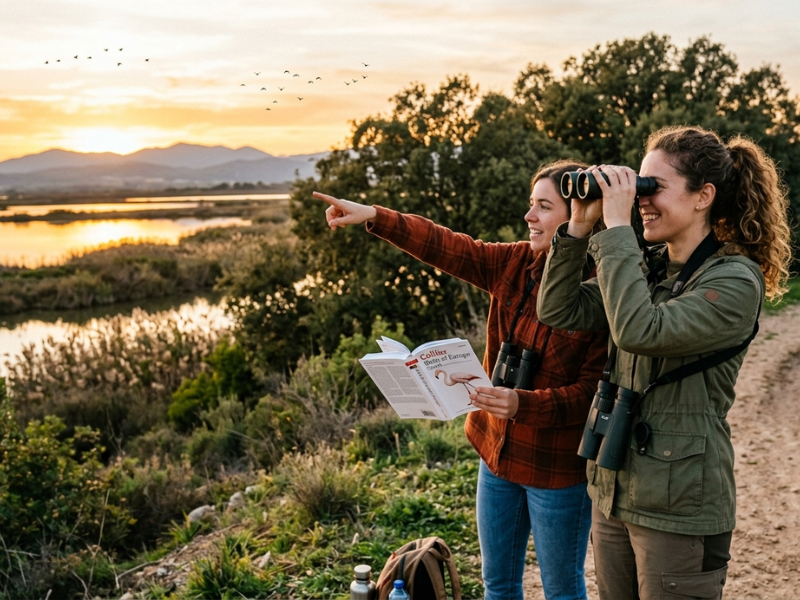
This is the one item you genuinely can’t skip. Without them you’ll miss ninety percent of the magic. To start, I’d go with an 8×42. What does that mean? The 8 is the magnification, so the bird looks eight times closer, and the 42 is the lens diameter. Bigger means more light comes in, and also more weight.
It’s the sweet spot between weight and brightness. Go for 10x or 12x and the slightest tremor in your hands will make the image jump around, and you’ll get frustrated. Look for something that sits comfortably in your hands and doesn’t weigh like a cinder block, because you’ll have it hanging off your neck for hours.
The field guide
There are wonderful apps these days, but I’m still a romantic about books. The Sibley Guide to Birds is a huge help. Having it on paper lets you flip through it, write notes in the margins, check off the ones you’ve seen. It turns into a diary.
That said, technology is on our side here. Apps like Merlin Bird ID are pure magic. You can record a song and the app tells you who’s singing, in real time. It’s like having an expert whispering in your ear.
Clothing and footwear
Nothing complicated here. Comfortable clothes, colors that don’t shout (forget the neon yellow unless you want every bird to spot you from two miles off), and above all decent footwear. You’ll be walking on trails, mud, and rocks. A pair of hiking boots you’ve already broken in are your best friends. Water, too. Always bring water.
Where to start: your own backyard is a treasure
We sometimes assume that to see anything interesting we have to get ourselves to Cape May or the Rio Grande Valley. Those places are paradise, no argument, but when you’re training your eye, closer is better.
City parks and gardens
Don’t write off the park at the end of your street. Mockingbirds live there, along with mourning doves, cardinals, chickadees, and phoebes. These are birds that are used to people and will let you watch them up close without bolting at your first move. It’s the best training ground there is for learning to handle binoculars and read behavior.
Wetlands near you
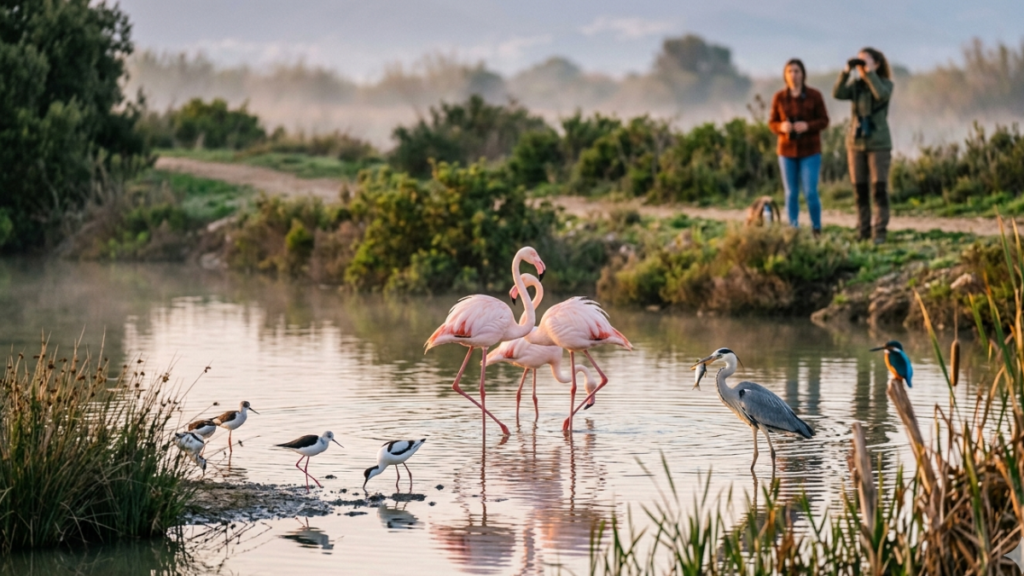
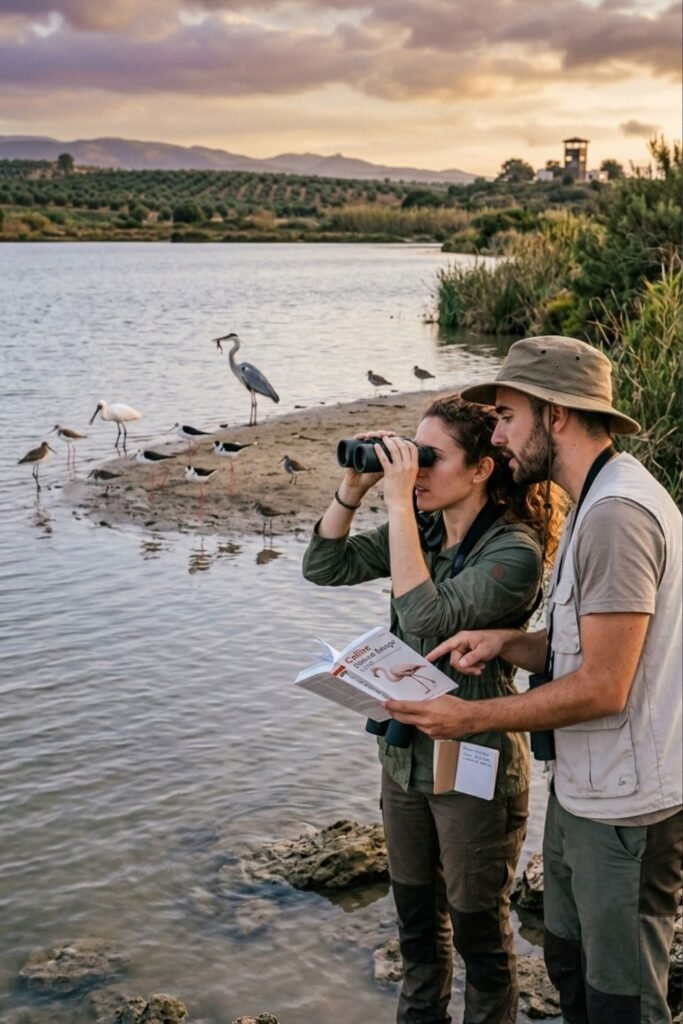
If you’re lucky enough to have a river, a pond, or a reservoir nearby, go. Water birds are easier to watch because they tend to sit out in the open. Ducks in a dozen colors, a great blue heron waiting with infinite patience for its dinner, or the spectacular belted kingfisher if you hang around long enough.
Getting properly out there
Once you feel comfortable, start exploring different habitats. A pine forest isn’t an oak savanna, and neither is a rocky canyon rim. Every ecosystem has its own cast of characters. North America sits on some of the most spectacular migration flyways on earth, which is a piece of luck we don’t appreciate enough.
How to watch without disturbing: birding ethics
This part is essential. We’re walking into their home, and their survival comes first. Birding should be a low-impact activity.
- Keep your distance: if the bird stops doing what it was doing, whether that’s feeding, preening, or singing, to look at you, you’re too close. Take a step back.
- Quiet, and slow movements: you don’t have to go full commando, but skip the shouting and the sudden gestures. Patience is your best tool.
- Don’t overuse playback: there are recordings you can use to draw birds in. Use them very sparingly, especially during breeding season. You can stress an animal by making it think there’s a rival on its territory.
- Stay away from nests: never, under any circumstances, approach a nest to take a photo. The risk of the parents abandoning the clutch is extremely high.
Clear steps for your first outing
- Pick your moment: dawn and dusk are rush hour. That’s when birds are most active, singing most, and moving around to find food. The light is gorgeous, too.
- Check the forecast: a windy day isn’t ideal, because birds hunker down and you can’t hear them. Clear skies or high clouds are perfect.
- Pack your bag: binoculars, guide, water, a snack, and a notebook.
- Arrive and wait: don’t march through at walking-workout speed. Get to a spot, sit down on a rock, and stay still for five minutes. The woods will get used to you and life will start surfacing around you.
- Watch the behavior: don’t fixate on putting a name to everything. Watch what it does. Is it hunting for seeds? Defending a territory? How does it fly? That’ll stick with you far better than reading a description.
Conservation: how can we help?
Birding makes you love nature, and we protect what we love. Birds face enormous challenges: habitat loss, climate change, pesticides. It isn’t all bad news, though. We can all do our bit.
Turn your balcony or yard into a refuge
If you have any outdoor space, put out a bird bath. In summer, clean water is a magnet for birds and it saves lives. You can also add nest boxes or native plants that fruit or draw insects, which is what a lot of birds eat.
Support local organizations
There are plenty of groups doing work on the ground, restoring wetlands or protecting species in trouble. Becoming a member or volunteering is a great way to move into action and meet people who care about the same things you do.
Citizen science
Taking part in counts or uploading your sightings to platforms like eBird or Audubon’s Christmas Bird Count helps scientists enormously in tracking how bird populations are doing. It’s exciting to know your data is helping protect a species.
Frequently asked questions about getting started in birdwatching
Is it an expensive hobby?
Not at all. The biggest expense is binoculars, and there are very respectable options under 200 dollars that will last you years. The rest is basically walking.
Do I need to know a lot of biology?
None whatsoever. I learned by looking and asking. You don’t need a degree, just curiosity. You’ll pick up the terms and names as you go, but at the start, just enjoy the show.
Can you go birding in the city?
Absolutely yes. In cities like New York or Chicago you can see more than fifty species in a single day if you know where to look. Peregrine falcons, red-tailed hawks, monk parakeets. The city is full of wildlife.
What happens if I can’t identify a bird?
Nothing at all. Sometimes they move fast, the light is bad, or they’re just genuinely difficult. Don’t stress about it. Enjoy the moment, and if you can, take a photo or jot down its features to look up later at home. Sometimes the mystery is part of the fun.
The gift of patience
We live in a world of instant gratification. We want everything now, and birding teaches the opposite. It teaches you to wait, to watch, to accept that sometimes the bird you’re after doesn’t show, and that something you weren’t expecting turns up instead.
It’s a cure for the soul. I promise you that after a morning outdoors watching birds, your energy will be different. You’ll feel restored, connected, and a whole lot healthier about whatever you were worrying over.
Give it a shot. Grab a pair of binoculars, get out there, and let yourself be surprised. Above all, have fun with it. This isn’t a competition over who has the longest list. It’s an invitation to marvel at the beauty around us.
Have you ever tried watching birds? Which bird have you always wanted to see and still haven’t found? If you have any questions about which binoculars to pick, leave them in the comments. I promise to read you and answer with real enthusiasm. Let’s build a birding community nobody can stop.