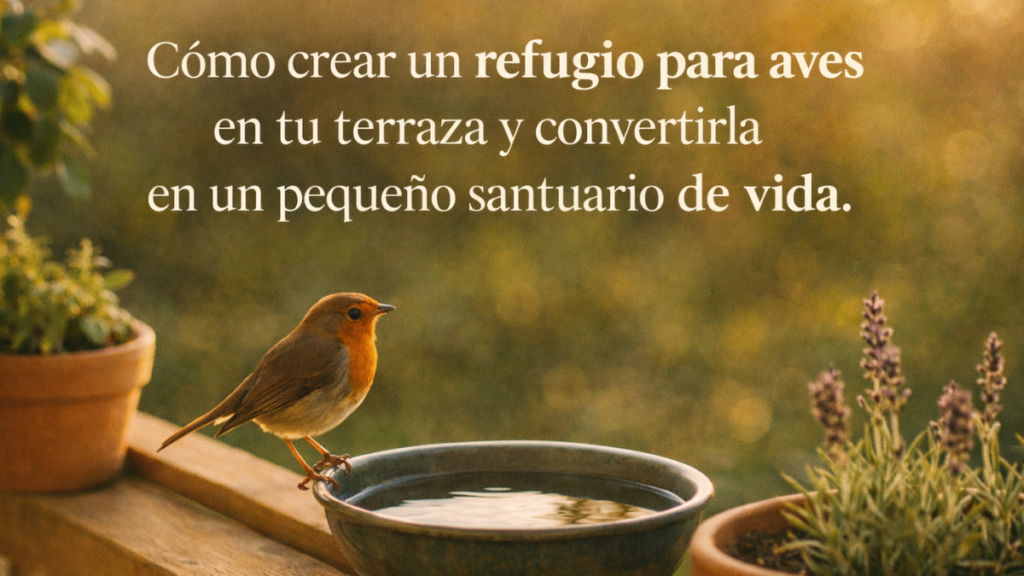
Learn how to build a bird refuge on your terrace, simply, respectfully, and naturally. A thorough guide to attracting city birds, caring for them from home, and finding everyday nature in the middle of the city.
Building a refuge for birds doesn’t mean drawing animals in to watch them like a show. It doesn’t mean feeding them constantly or interfering with how they behave. A refuge is, above all, a safe space inside an environment that often isn’t.
In the city, birds run up against a shortage of clean water, thin vegetation, too much noise, and surfaces that don’t let them rest easily. An adapted terrace can become a foothold in that difficult environment.
A refuge offers water, cover, quiet, and natural resources. It lets birds decide whether to come or not. It respects their pace and their nature. It doesn’t push.
That distinction matters, because it separates helping from disrupting. The point isn’t to change the birds. It’s to adapt the space so they can use it if they need it.
Why urban birds need refuges more than ever
Cities have been losing their in-between spaces. Where there used to be trees, hedges, or small gardens, there are now hard, smooth surfaces. That leaves birds with fewer chances to feed, rest, or take cover.
A lot of urban species get by on sheer adaptability, and even they are finding it harder. Access to clean water is one of the biggest problems, especially in hot weather. The drop in insect numbers hits their food supply directly. Constant noise interferes with how they communicate and navigate.
Building refuges on terraces doesn’t fix all of that, but it takes some of the pressure off. Every adapted terrace is a small rest stop. A place where a bird can drink, bathe, or just sit and watch without feeling exposed.
These refuges also change the relationship between people and urban nature. Watch birds up close and your sense of your surroundings shifts. You start noticing what’s actually going on around you.
Look at your terrace differently before you start
Before you move plants around or add anything, spend some time just watching the terrace. Every space is different and there’s no single formula that works everywhere.
Which way it faces is one of the biggest factors. A south-facing terrace gets more hours of sun, while a north-facing one stays cooler and shadier. Both can work as refuges, but they’ll draw different birds and need different solutions.
Height matters too. Terraces on upper floors tend to get species that fly high and move easily between buildings. On lower floors, you’ll see more of the birds that stay comfortable near the ground.
Noise is worth thinking about as well. You don’t have to eliminate it, just work out which parts of the day are calmest. Birds usually take advantage of early morning and dusk, when human activity drops off.
Watching for several days tells you how the space behaves. That’s valuable information when you’re deciding where to put each piece of the refuge.
Plants are the foundation of any bird refuge
Plants are the heart of a bird refuge. They do far more than look good. They create structure, they give cover, and they bring in insects, which are an essential part of what many species eat.
A terrace with plants reads as a more natural, less exposed space. That sense of protection is what makes birds willing to come closer. You don’t need to fill every inch with pots. Choosing well and placing carefully gets you further. A few plants grouped together create a far more welcoming effect than many plants scattered around.
Which plants work best on a refuge terrace
The plants that work best are the ones that resemble what birds would find in the wild. Tough plants, dense foliage, simple flowers, shrubby structure.
Herbs like rosemary, lavender, thyme, and sage are excellent choices. They smell good, they pull in insects, and they hold up well in pots. Native vines like Virginia creeper or coral honeysuckle give cover and shade, and both produce fruit birds actually eat. Wildflowers add seed and bring in pollinators.
Choosing plants suited to your local climate makes them easier to keep alive and creates a more coherent environment for the birds.
How to arrange plants so birds feel safe
Where you put the plants matters as much as which ones you pick. Birds prefer spaces where they can move between levels and disappear quickly if they need to.
Grouping pots in one corner creates a sense of shelter. Mixing tall plants with lower ones adds depth and structure. A bushy plant near the railing lets birds land without being completely in the open.
You’re building small visual routes and transition zones, not open flat ground.
Water at the center of the refuge
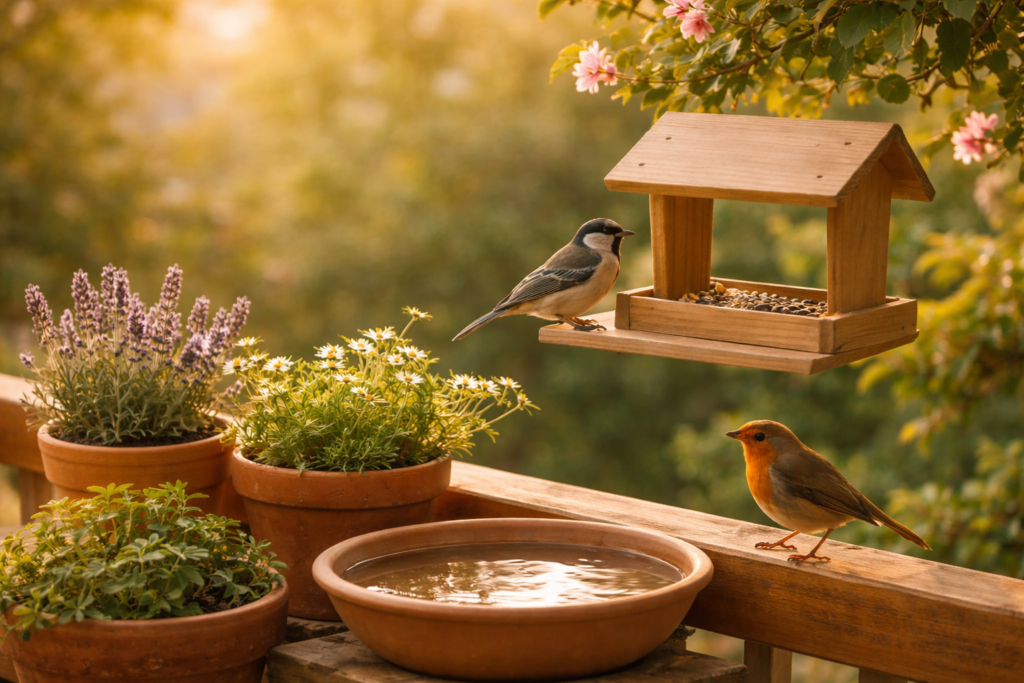
Water sits at the center of a bird refuge. For much of the year it matters more than food. In cities, finding clean, reachable water isn’t easy for birds, especially in heat or drought.
A water source on the terrace can make an enormous difference. It isn’t only for drinking. Birds need to bathe to keep their feathers in good condition, get rid of parasites, and regulate their body temperature.
A simple, shallow, stable bowl is enough. You don’t need an elaborate fountain or decorative hardware. Simplicity and upkeep are what count.
Change the water often, ideally every day in summer and every other day when it’s cooler. A few stones in the bowl help birds feel steadier and keep them from slipping.
Placement matters as well. The bowl should be visible but not completely exposed. Putting it near plants or anything that offers cover lets birds approach with more confidence.
Watching a bird drink or bathe is one of the most intimate things you can witness from a terrace. It’s a small thing that creates a deep connection to the life moving around us.
Feeding birds on the terrace responsibly
Food can be part of the refuge, as long as you approach it responsibly. The goal isn’t for birds to depend on you. It’s to offer support at specific moments.
Through winter or during lean stretches, a well-managed feeder can really help urban birds. In spring and summer, when there’s more available naturally, water and plants are the better priority.
What you put out is critical. Black oil sunflower seed is one of the best options, because it delivers energy and nearly every species takes it. Ripe fruit like apple or pear appeals to mockingbirds and robins. Unsalted peanuts, always chopped, are a useful source of energy, especially in winter.
Some foods should be avoided completely. Bread, though people have always used it, has none of the nutrients birds need and can cause health problems. Salty, sugary, and processed foods are harmful too.
Clean the feeder regularly so bacteria and mold don’t build up. A badly managed refuge can turn into a source of disease, which defeats the whole purpose.
Putting the feeder somewhere raised and close to plants makes it easier for birds to approach without feeling vulnerable.
Safety comes first in any bird refuge
A refuge only works if birds feel safe. Safety is what decides whether they come back, or whether they stay a few minutes longer.
Glass is one of the biggest risks on urban terraces. Reflections confuse birds into seeing open space where there’s a solid obstacle. Small decals, patterns, or decorative pieces break up the reflection and cut the risk of collisions.
Cats in the area need factoring in too. If there are cats nearby, keep everything raised and away from anything they can climb. Birds need clear, fast escape routes.
Avoid constantly rearranging the refuge. Birds value stability and settle in more easily when the space doesn’t change abruptly.
Don’t use chemicals on plants or floors at all. Pesticides and herbicides hurt birds and the insects they depend on.
The role of quiet and calm in building a bird refuge
A refuge isn’t built out of objects alone. The atmosphere counts too. Constant noise, sudden movements, and too much presence will put off the more sensitive birds.
You don’t need to create silence, just respect certain parts of the day. Early morning and dusk are usually when birds are most active.
Staying calm, watching from a distance, and avoiding sudden gestures all help birds feel secure. Over time many get used to people being around and carry on behaving naturally.
Which birds might use your refuge, depending on where you are
Every terrace attracts particular species depending on its location, height, and surroundings. In urban areas, house sparrows, pigeons, doves, and mockingbirds are common. In winter you might get cardinals and juncos. In greener neighborhoods, chickadees, titmice, or phoebes can turn up.
Not all of them want the same thing. Some come mainly for the water, others for food, others for the chance to rest somewhere quiet.
Noticing which birds show up and adapting the refuge to what they need is a respectful way to go about it. Forcing the presence of species that aren’t usually around rarely works.
Patience is part of the process
Building a bird refuge is an exercise in patience. Visits don’t always come right away. Sometimes days go by, or weeks, with nothing visible happening.
Consistency is what matters. Keeping the water clean, looking after the plants, and respecting the space lets birds find the refuge little by little.
Every visit, however brief, is a sign the space works. In time some birds come back regularly and the refuge becomes part of their routine.
Common mistakes when building a bird refuge
One of the most common mistakes is trying to do too much too fast. Filling the terrace with things before you’ve seen how birds react can backfire.
Another frequent error is feeding constantly with no limits. Heavy dependence doesn’t benefit birds and can alter their natural behavior.
Getting too close, or trying to interact more than necessary, is also common. Birds need their space and their autonomy.
Respecting the timing, watching, and adjusting gradually gives better results.
The refuge as an everyday act of conservation
Building a bird refuge on your terrace is a simple way to take part in urban conservation. Every refuge counts. Every water source, every plant, every quiet space helps birds find support in an environment that keeps getting harder.
These small efforts also build a more conscious relationship with your surroundings. People who watch birds tend to develop a sharper sensitivity to nature and what it needs.
Frequently asked questions about building a bird refuge on your terrace
How long do birds take to start using the refuge?
It varies with the surroundings and how quiet the space is. Sometimes the first visits arrive within a few days. Other times the process takes several weeks.
Can you build a refuge on a small terrace?
Even a small terrace can offer water and one or two plants that birds will find useful. Size isn’t the deciding factor.
Do you need to run a feeder all year?
A feeder is occasional support, most useful in winter. There’s no need to keep it going year-round.
Do birds make a mess of the terrace?
Birds do bring a certain amount of mess, but with regular upkeep it isn’t a significant problem.
Is the refuge safe for the birds?
A well-designed refuge, with no obvious hazards and the right food, is safe and beneficial for birds.
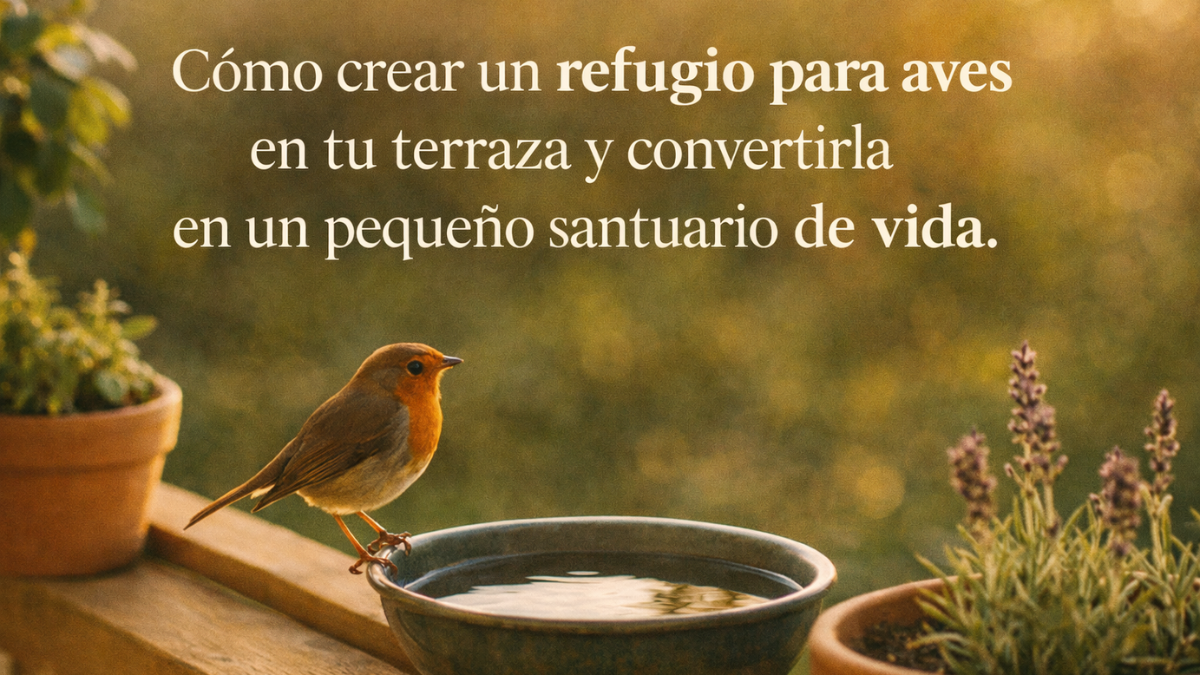
Learn how to build a bird refuge on your terrace, simply, respectfully, and naturally. Find out how to offer water, plants, and safety so you can help city birds and enjoy nature from home.
Watch your terrace before changing anything
Spend a few days noting the light, the noise, the height, and the calmest moments, so you understand how the space behaves and which birds might come.
Add plants that bring cover and life
Use tough, climate-appropriate plants that give shade, visual protection, and draw insects, building a natural, welcoming structure.
Put out a shallow bowl of clean water
Add a stable container of fresh water in a quiet spot, changing it often so birds can drink and bathe safely.
Offer food only occasionally and appropriately
Use seed suited to wild birds only at specific times, avoiding unsuitable foods and keeping the feeder clean.
Make the terrace safe from hazards
Break up reflections on glass, block predator access, and keep chemicals away from anything that could put birds at risk.
Keep the refuge stable and clean
Avoid constantly rearranging the space, and clean the water and the other elements regularly to keep the environment healthy.
Watch patiently and adapt the refuge
Let birds find the space at their own pace, and adjust the refuge according to the species that appear and what they need.
Supply:
- seed suited to wild birds, water
Materials: Potted plants, shallow water bowl, decorative elements to break up reflections on glass
Seeing the terrace as a living space
Turning the terrace into a bird refuge changes how you live in your own home. The space stops being purely functional and becomes a point of contact with the life going on beyond the walls.
There isn’t always movement, and there isn’t always a steady stream of visitors. Some days are quiet and still. Even then, the sense of offering somewhere safe stays with you.
Building a refuge is a simple gesture that gives back more than you’d expect. It gives calm, awareness, and a different relationship with the city around you.
If you decide to build your own bird refuge on your terrace, I’d like to hear how it goes. Which species turn up, what you notice changing, what questions come up along the way. Sharing that is part of the refuge too.