Birdwatching is a lot more than a hobby. It’s a way to connect with yourself, with nature, and with silence. Here’s how to start, why it hooks you, and what it does for your mind and for the planet.
The morning I looked out the window and everything changed
I couldn’t tell you the exact day, but I remember the scene. A quiet morning, coffee still hot in my hand, and then a little sparrow landed on the window railing. It stayed there, completely still, like the world had paused for a few seconds too.
Ever since, I look out that window with curiosity every day. Birdwatching has turned into more than a pastime. It’s a way of being present, of remembering that life is out there going on, unhurried and quiet.
Sometimes I think it wasn’t that I started watching birds. They taught me how to look.
Birdwatching is simple, and it changes things
The lovely part is that you don’t need much. No expensive binoculars, no forest outside your door. A few minutes and some attention will do.
Birdwatching is more than identifying species. It’s tuning into a natural rhythm, into the calm hiding in the trees or even on a power line. Every bird has its own character, its own story, its own way of reminding you that the world doesn’t revolve around you.
When you spend a while watching, time changes speed. You start noticing details that used to be invisible: the sound of wings, the shine of feathers, the pauses between songs. It’s like the world turns down the volume on what’s urgent and turns up what actually matters.
The benefits of birdwatching nobody tells you about
Immediate mental calm
Watching birds is relaxing, and you feel it right away. There’s research backing it up, but you only have to try it to understand. Just standing still and observing, doing nothing else, slows your inner pace.
You don’t need to be deep in nature. A palm tree in the city, or a tree on the sidewalk, can be enough to unplug from the mental noise.
Birdwatching brings you back to the present. All of a sudden, whatever was worrying you looks smaller.
Reconnecting with the natural world
We live surrounded by screens, it’s true, and we’re still part of the natural world. When you see a bird, something in you remembers that you belong to the same world that bird flies and breathes in. It feels like coming home, even from an apartment in the middle of the city.
There’s a quiet connection between that free creature and you. It’s almost instinctive, like your body recognizes something your mind had forgotten.
Better focus and more patience
Birdwatching means looking slowly. It isn’t about “catching” a photo. It’s about noticing how a bird moves, what colors it has, how it tilts its head, how it sings. That kind of full attention is natural training for patience.
Without noticing, that calmer attitude starts leaking into your day. You become more aware of what you’re doing, more tuned to detail, less impatient with everything.
Emotional wellbeing that lasts
Every time I recognize a song or spot a new species, I feel a happiness I couldn’t quite explain. It isn’t an intense emotion. It’s soft, closer to peace. Happiness without noise.
How I started, and how you can too
I started without meaning to. One day I looked out the window and stayed longer than usual. Then I did it again, and before I knew it, it was part of my routine.
You can start the same way. There’s no single method, but here’s what worked for me.
Start with what’s right outside
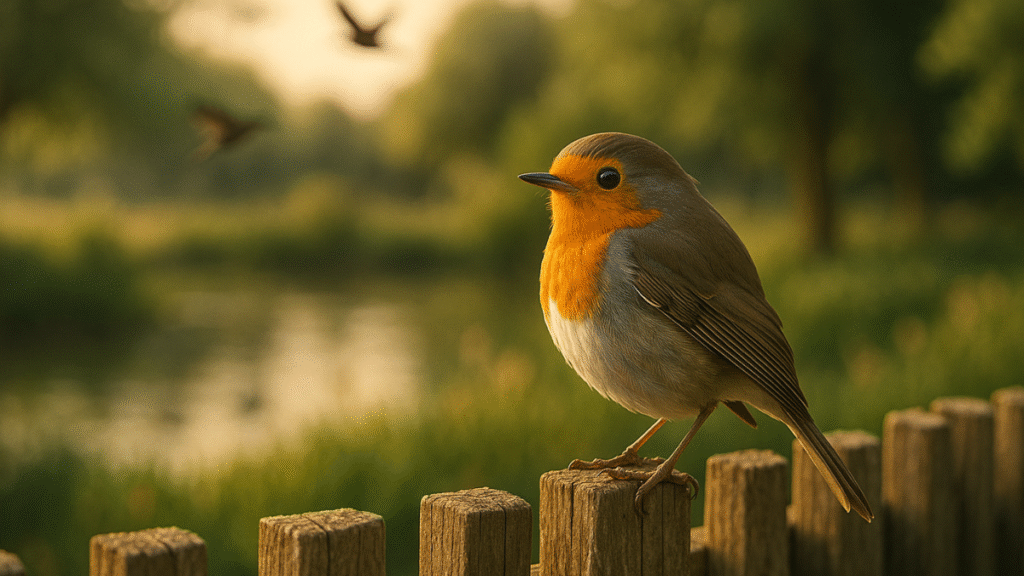
Don’t go hunting for rarities. The most common birds have plenty to teach you. Sparrows, blackbirds, doves, robins. All of them have something to show you if you know how to watch.
Over time you’ll recognize them by their flight, their size, or their song. That feeling of familiarity is deeply comforting.
Build a small ritual
You don’t need hours. Five minutes a day is enough. I do it in the morning, over breakfast or before heading to work.
No phone, no distractions. I just look.
Turning it into a ritual shifts your energy. You start the day calm, with a more open way of seeing.
Use tools if you want to
If you like knowing names and songs, there are free apps that help a lot, like Merlin or BirdNET. You can also jot your sightings down in a notebook, or grab a quick photo. Not to collect data, just to enjoy the process.
Learn to listen
Telling songs apart is hard at first, then it becomes second nature. Every species has its own tone and rhythm.
The blackbird, for instance, sings a melancholy tune at dusk. Once you learn to pick it out, every evening sounds different.
Birdwatching is also a way of caring for the planet
Every look counts
Birdwatching is a form of care, too. When you pay attention to birds, you become aware of them, of what they need, of what’s changing around them. Almost without realizing it, that leads you to protect it.
Citizen science
Anyone can contribute these days. There are projects where you can log your sightings, like eBird or Audubon.
Your data helps scientists track migrations, spot species in trouble, and see how ecosystems are shifting. Every observation adds up, and yours can make a difference.
Make a small refuge
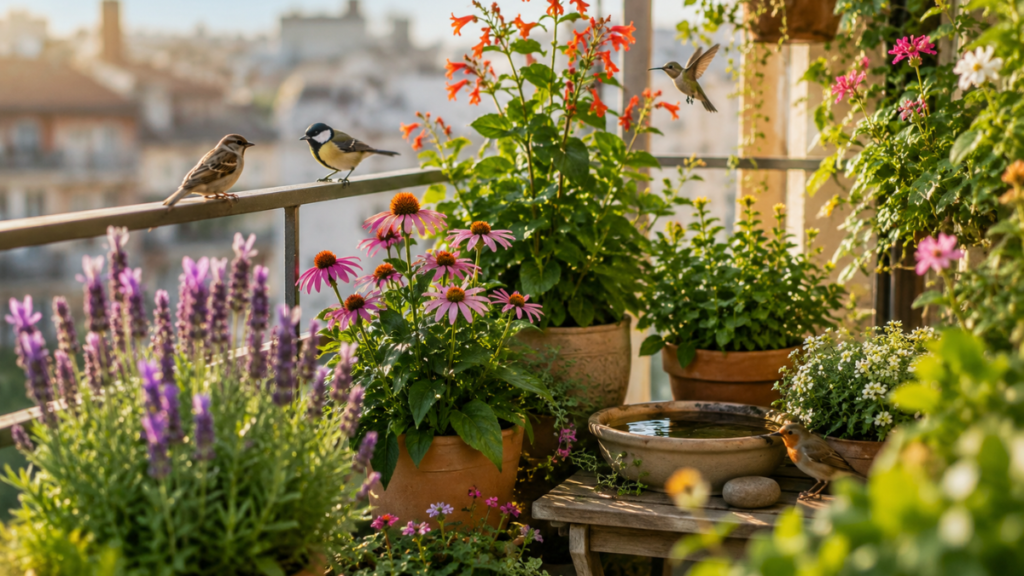
You don’t need a big yard. A little clean water, some native plants, and a simple feeder are enough to give city birds a break.
Skip the pesticides, keep the area safe from cats, and use shallow bird baths.
Taking care of them is taking care of the balance of everything.
What birds have taught me about life
Since I started watching birds, I’ve learned three important things.
First, that beauty is in the everyday. You don’t have to go far to find it.
Second, that everything has its own timing. Birds fly when they want to, not when you want them to.
Third, that silence speaks too. Sometimes the most beautiful moment is right before the song.
Watching them has changed the way I see. It’s taught me to wait, to enjoy the moment, and to appreciate what’s right in front of me.
Frequently asked questions about birdwatching
Do I need binoculars to start?
No. Your eyes are enough to begin with. Binoculars help, but they aren’t essential.
Where can I watch birds if I live in the city?
Anywhere. Parks, balconies, gardens, rooftops. City birds are more adaptable than we give them credit for.
What if I can’t identify the species?
That’s fine. Enjoy the moment. Over time you’ll start recognizing them without even trying.
What’s the best time of day to watch?
Dawn and dusk, when birds are most active and everything around them is quieter.
Is birdwatching the same as birding?
People use both words for the same thing. Birding tends to suggest a more active pursuit, going out to look and keeping lists, while birdwatching often means the quieter version, watching whatever comes to you. Either way, it’s the same love of the same thing.
How to share this and not feel alone in it
One of the nicest things about birdwatching is that it builds connections. You can join local groups, follow birding organizations, or just share your photos online.
This blog started for exactly that reason. To share what I see, what I feel, and what I learn. Every time someone writes to tell me they’ve started looking out their window a little more slowly, it feels worth it.
The art of looking slowly
Birdwatching isn’t a trend or a passing hobby. It’s a way of coming back to the present, of reconnecting with what actually matters.
Every time one of them lands nearby, time seems to stop for a second.
Give it a try. Look out the window, breathe, listen.
Tell me, have you started watching birds lately? Do you have a favorite species, or a story that got to you?
Let me know in the comments. I’d love to read you and keep learning together. Who knows, maybe this blog ends up being a small community of people who look at the world with a little more tenderness and attention.